
H1:Power Switchgear Cabinets: Thermal Priorities for Outdoor Enclosures
Outdoor cabinet cooling problems are often treated as “just add more cooling capacity.”
For panel builders and switchgear projects, that mindset creates avoidable rework: unstable temperatures, repeated alarms, and higher O&M cost.
A more reliable approach is to focus on thermal priorities that are specific to outdoor power cabinets:
(1) heat sources, (2) site stressors, (3) airflow layout (hot/cold zoning), and (4) serviceability.
This article is written for switchgear / control panel manufacturers who deliver outdoor enclosures to hot, dusty, or humid regions.
H2:Why “Outdoor Cabinet” Is Not One Scenario
Two outdoor enclosures can look similar but behave very differently.
In outdoor power distribution, the cabinet is usually exposed to a combination of:
-
High ambient temperature (worst hour matters more than daily average)
-
Solar load (direct sun vs shaded placement can change reality a lot)
-
Dust and maintenance limits (performance degrades if cleaning is difficult)
-
Installation constraints (clearances and airflow paths are not always ideal)
So the main engineering question becomes:
How do we keep thermal performance stable after installation and over time?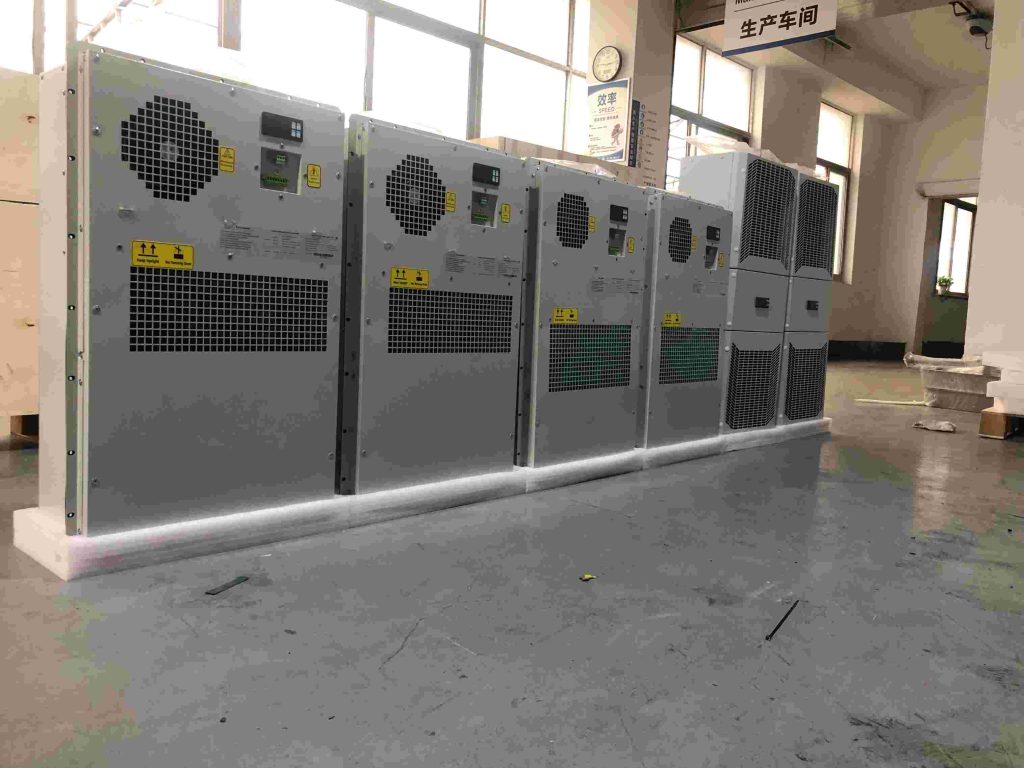
H2:Typical Heat Sources in Switchgear / Control Panels
Instead of guessing by “cabinet size,” start from the components that actually generate heat. Common contributors include:
-
Drives (VFDs) and soft starters
-
Power supplies, UPS modules, DC power systems
-
Transformers (where applicable)
-
Control electronics (PLCs, I/O, relays)
-
Network / industrial communication devices
-
Contactors, breakers, resistive losses at terminals (project dependent)
Practical tip: the “hottest” devices often create local hotspots, which can cause false alarms if sensors are placed too close or airflow is poorly directed.
H2:The #1 Hidden Cause of “Cooling Not Enough” — Air Mixing and Short-Circuiting
Many field complaints are not caused by insufficient cooling capacity.
They are caused by hot air mixing with cold supply air inside the enclosure, or short-circuit recirculation (cold air returns before reaching the heat sources).
What stable airflow looks like (simple concept)
-
Define a hot zone (where heat is released)
-
Define a cool supply zone (where cooled air enters)
-
Maintain a clear return path for hot air back to the cooling unit
-
Use baffles/partitions when needed to prevent mixing
Key message: the goal is not “bigger cooling.”
The goal is ensuring cool air reaches equipment intakes and hot air returns cleanly.
Image recommendation (SEO note): Use a “Wrong vs Right” airflow zoning diagram drawn by your team or using licensed assets.
Suggested ALT text: “Airflow zoning inside an outdoor switchgear cabinet: wrong mixing vs right hot/cold separation.”
H2:Outdoor Site Stressors That Matter Most for Panel Builders
1) Solar exposure (direct sun)
Solar load can turn a “normal” ambient day into a high internal temperature event.
If your cabinet is installed in full sun, plan airflow and shading guidance accordingly.
2) Dust level and cleaning reality
Dust accumulation increases resistance and reduces heat transfer over time.
The best design is the one that stays serviceable when maintenance is not perfect.
3) Humidity / coastal environments
Even if IP rating prevents ingress, humidity and condensation risks can still exist depending on local climate and door-open events.
Document realistic maintenance and sealing practices for the site.
4) Installation clearances
Outdoor electrical yards and skids often limit clearances.
Insufficient spacing can cause hot exhaust air to be pulled back into the intake area, raising condenser temperature and reducing performance.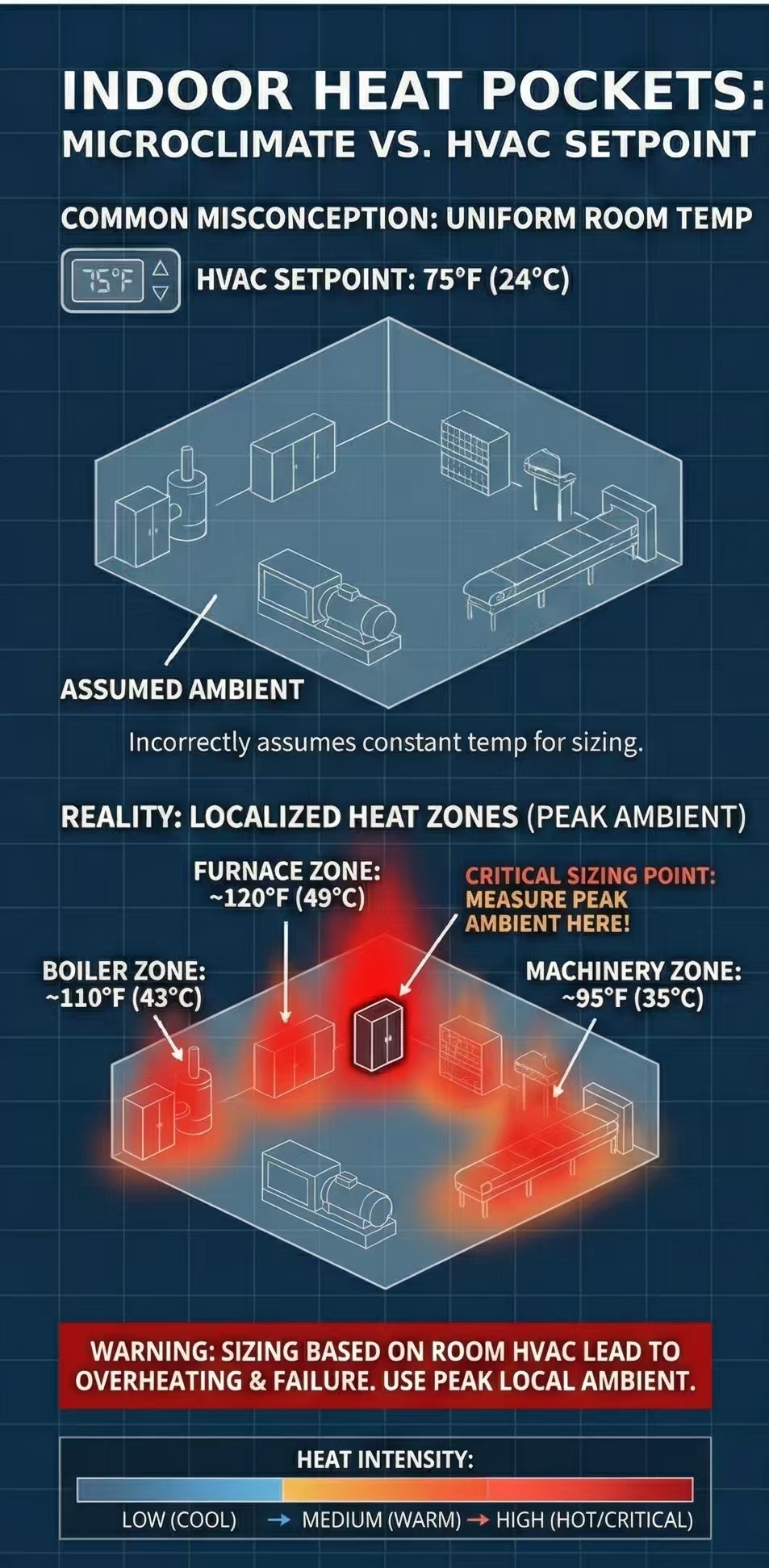
H2:Sensor Placement — Avoid False Alarms
A temperature sensor can only represent what it “sees.”
If it sits next to a hotspot or in a dead corner, alarms may not reflect the overall cabinet condition.
Practical recommendations:
-
Avoid placing sensors directly beside high-loss devices
-
Avoid dead corners with weak circulation
-
Choose a representative point aligned with the airflow path (often near the return air path, depending on design)
This helps reduce false alarms and creates more stable control behavior.
H2:5-Minute Field Checklist (for Switchgear Cabinet Delivery)
Use this checklist when your cabinet is installed or during commissioning:
-
Sun/Shade: Is the cabinet in direct sun all day? Any shading plan?
-
Clearance: Is there enough free space for air intake/exhaust?
-
Airflow path: Can cool supply air reach the main heat sources?
-
Hot air return: Is hot air returning cleanly without short-circuit mixing?
-
Dust reality: What dust level is expected, and can filters/heat exchanger surfaces be cleaned easily?
-
Door-open events: How often will doors be opened for maintenance?
-
Sensor location: Is the sensor away from hotspots and dead corners?
If your project team answers these early, you prevent a large percentage of post-handover thermal surprises.
H2:Common Misunderstandings (and Better Alternatives)
Misunderstanding #1: “Cabinet volume decides cooling.”
✅ Better: identify heat sources + site stressors + airflow layout.
Misunderstanding #2: “More cooling capacity always solves alarms.”
✅ Better: prevent mixing/short-circuiting and keep airflow stable.
Misunderstanding #3: “Maintenance will be done perfectly.”
✅ Better: design for realistic maintenance access and document it clearly.
H2:FAQ
Q1: Why do outdoor switchgear cabinets alarm even when cooling capacity looks sufficient?
Often due to airflow mixing/short-circuiting, solar load, dust degradation, or installation clearance issues—rather than raw capacity.
Q2: How can panel builders reduce post-handover temperature complaints?
Provide clear installation guidance (shading/clearances), ensure airflow zoning inside the cabinet, and document realistic maintenance actions.
Q3: Is an IP rating enough to prevent all humidity-related issues?
IP rating helps with ingress protection, but humidity/condensation risk can still exist depending on climate and operational events (e.g., door-open).
Q4: Where should the temperature sensor be placed?
At a representative point aligned with airflow—not at a local hotspot or dead corner. Exact placement depends on cabinet layout and air path.
H2:Need a Quick Layout Check for Your Project?
If you are a panel builder / switchgear manufacturer working on outdoor cabinets, send your site conditions and cabinet info on WhatsApp, and we’ll reply with practical layout priorities.
WhatsApp message template (copy/paste):
“Outdoor switchgear cabinet project: max ambient __°C, dust (L/M/H), sun (full/partial/shade), cabinet size __, main heat sources __. Please share layout priorities.”
✅ WhatsApp us:+86 18854227753