
Outdoor Power Cabinet Cooling Case Study: Reducing High-Temperature Alarms
In outdoor power distribution cabinets, repeated high-temperature alarms are not always caused by “insufficient cooling capacity.” In this project, the main issue was airflow short-circuiting, localized hotspots, and limited installation clearance—reducing the effective cooling performance under real site conditions.
This case study shares a practical approach to stabilize cabinet temperature and reduce alarm frequency through airflow layout optimization and correct installation details.
Project Background
The customer was commissioning an outdoor power distribution cabinet system in a hot climate environment. During daytime operation, the cabinet experienced frequent high-temperature alarms, especially during peak ambient temperature periods and under direct sunlight exposure.
Although an enclosure air conditioner had already been installed, temperature stability was still not acceptable, leading to repeated site feedback and maintenance concerns.
Key Challenges
-
High ambient temperature and solar heat load (outdoor installation)
-
Heat concentration near power devices and electrical components
-
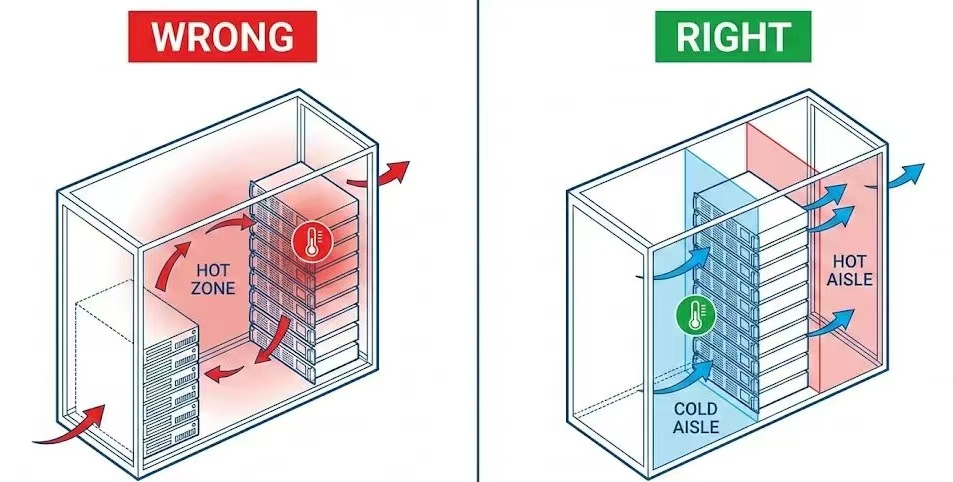
Airflow mixing inside the cabinet (cool air did not reach the main hotspots)
-
Limited external clearance around the condenser side
-
Alarm sensor placement close to localized hot zones
Site Assessment (What We Found)
1) Cool air was “short-circuiting”
Part of the cooled air returned too quickly to the air conditioner intake, reducing the real cooling effect on the heat sources.
2) Local hotspots dominated alarm behavior
A small number of components generated concentrated heat. The sensor was positioned near one hotspot, so alarms triggered early—even when the overall cabinet temperature was still manageable.
3) Installation conditions affected condenser efficiency
Limited clearance and poor airflow outside the cabinet increased the risk of warm exhaust air recirculation, reducing heat rejection performance.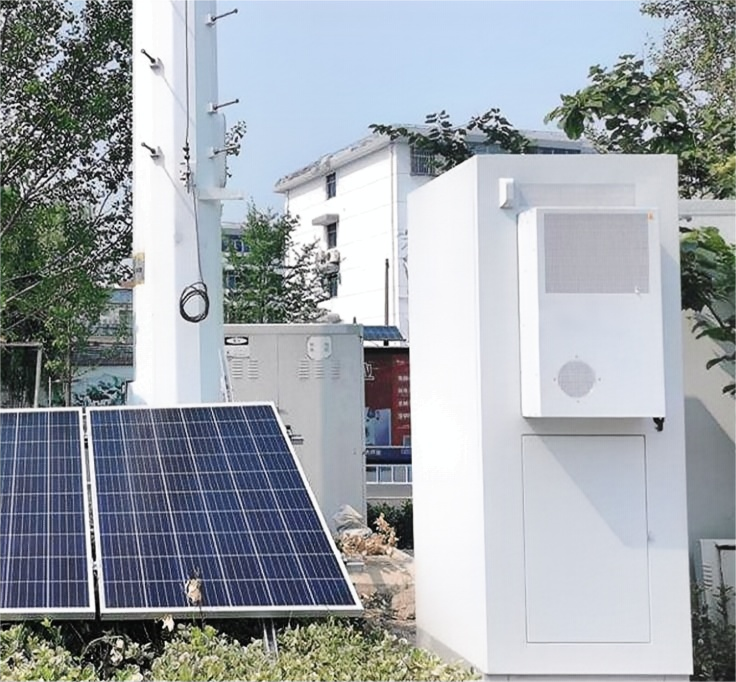
The Solution
A) Airflow layout optimization inside the cabinet
We improved the internal airflow path to create a clearer separation between:
-
Cool air supply zone (toward heat sources)
-
Hot air return zone (back to the unit intake)
This reduced air mixing and increased effective heat removal from critical components.
B) Hotspot management
We adjusted internal layout guidance so cooled air was delivered more directly across the highest heat-generating components, improving temperature uniformity.
C) Installation spacing review
We rechecked external mounting conditions to ensure better airflow around the condenser side and reduce the chance of hot exhaust recirculation.
D) Sensor placement adjustment
The temperature sensor position was moved to a more representative location along the airflow path, reducing false alarms caused by localized hotspots.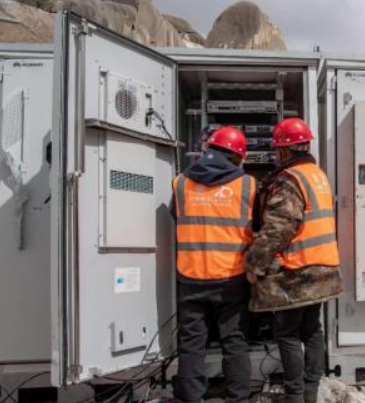
Results
After optimization, the cabinet operation became more stable under peak daytime conditions. The customer reported:
-
Significant reduction in repeated high-temperature alarms
-
Improved temperature consistency during hot periods
-
Better cooling performance on critical electrical components
-
Lower risk of repeat site visits due to temperature-related issues
Practical Lessons for Outdoor Power Cabinet Projects
-
Do not select cooling by cabinet size only
Heat sources and their distribution are more important than volume alone. -
More cooling capacity is not always the answer
Poor airflow organization can waste a large portion of usable cooling. -
Outdoor installation adds extra thermal load
Solar radiation and ambient temperature must be included in evaluation. -
Installation conditions matter
Even a good unit can underperform if condenser airflow is restricted. -
Sensor placement influences alarms
Avoid placing sensors too close to local hotspots unless that is the intended protection logic.
Recommended Information for Fast Selection
For a quicker and more accurate cooling recommendation, please prepare:
-
Cabinet dimensions (H×W×D)
-
Ambient temperature range (max daytime temperature)
-
Sun exposure condition (direct/partial shade)
-
Main heat sources (power loss or component list)
-
Required IP protection level
-
Quantity and installation method
Conclusion
This case shows that repeated high-temperature alarms in outdoor power cabinets often come from airflow layout and installation conditions—not only nominal cooling capacity.
A stable enclosure cooling solution should be evaluated based on real ambient conditions, airflow organization, hotspot distribution, and installation clearance. When these details are managed early, commissioning becomes smoother and long-term reliability improves.
Need help with an outdoor power cabinet cooling project?
Send us your cabinet size, max ambient temperature, IP requirement, and main heat sources. COLTEX can help review the application and recommend a suitable enclosure air conditioner solution.
WhatsApp: +86 18854227753
Email: info@qdcoltex.com
Website: www.qdcoltex.com