In the power industry, heat is the silent killer of VFDs and Inverters. But how exactly do we solve it when ambient air is too dirty or too hot to use?
The Science of the Solution: The "Closed-Loop" Advantage
Standard fans just push hot, dirty air around. Our solution is different. We don't just "blow air"; we create a Closed-Loop Micro-Climate:
Isolation: We completely seal the cabinet. External dust, moisture, and sulfides are physically locked OUT.
Active Heat Exchange: The internal evaporator absorbs the heat from the components, while the external condenser rejects it outside the cabinet.
Humidity Control: By controlling the dew point, we prevent internal condensation that causes short circuits.
PROJECT CASE STUDY: The "Heat Trap" Retrofit
Location: A Thermal Power Plant in UK
Application: Boiler Feed Pump VFD Cabinet
The Situation:
The client was using standard ventilation fans. During summer peaks, the control room temperature hit 40°C. Inside the cabinet? The IGBT modules were baking at 62°C, causing nuisance tripping twice a week. Every trip meant a boiler shutdown and hours of recovery time.
Our Intervention:
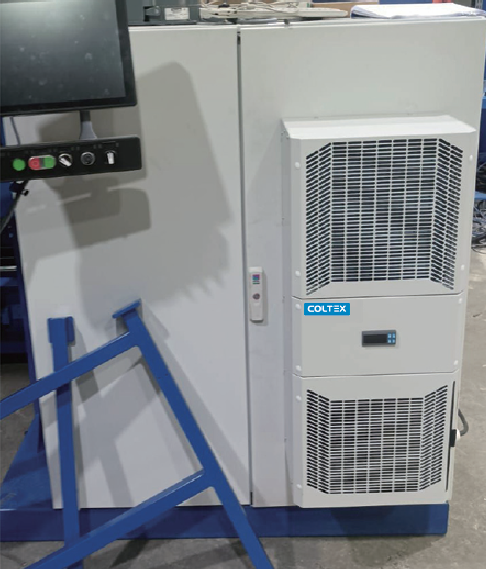
We replaced the fans with our COXLTEX- EPT01226I Cabinet Air Conditioner (Side-mounted).(Through scientific calculations, considering the on-site environment (e.g., presence of smoke, oil mist, condensate treatment, alarm modes, control signals, etc.), the required cooling capacity of the temperature control equipment is determined.)
The Transformation:
Before (09:00 AM): Cabinet Internal Temp: 58°C (Risk Zone)
After (11:00 AM): Cabinet Internal Temp: 30°C (Safe Zone)
The Outcome:
Since the retrofit 6 months ago, the client has experienced ZERO heat-related downtime. The equipment remains dust-free internally, and the maintenance team no longer needs to clean filters weekly.
This is not just an air conditioner; it's a guarantee of your equipment's stability.
Does your equipment run hot? Let's analyze your heat load.