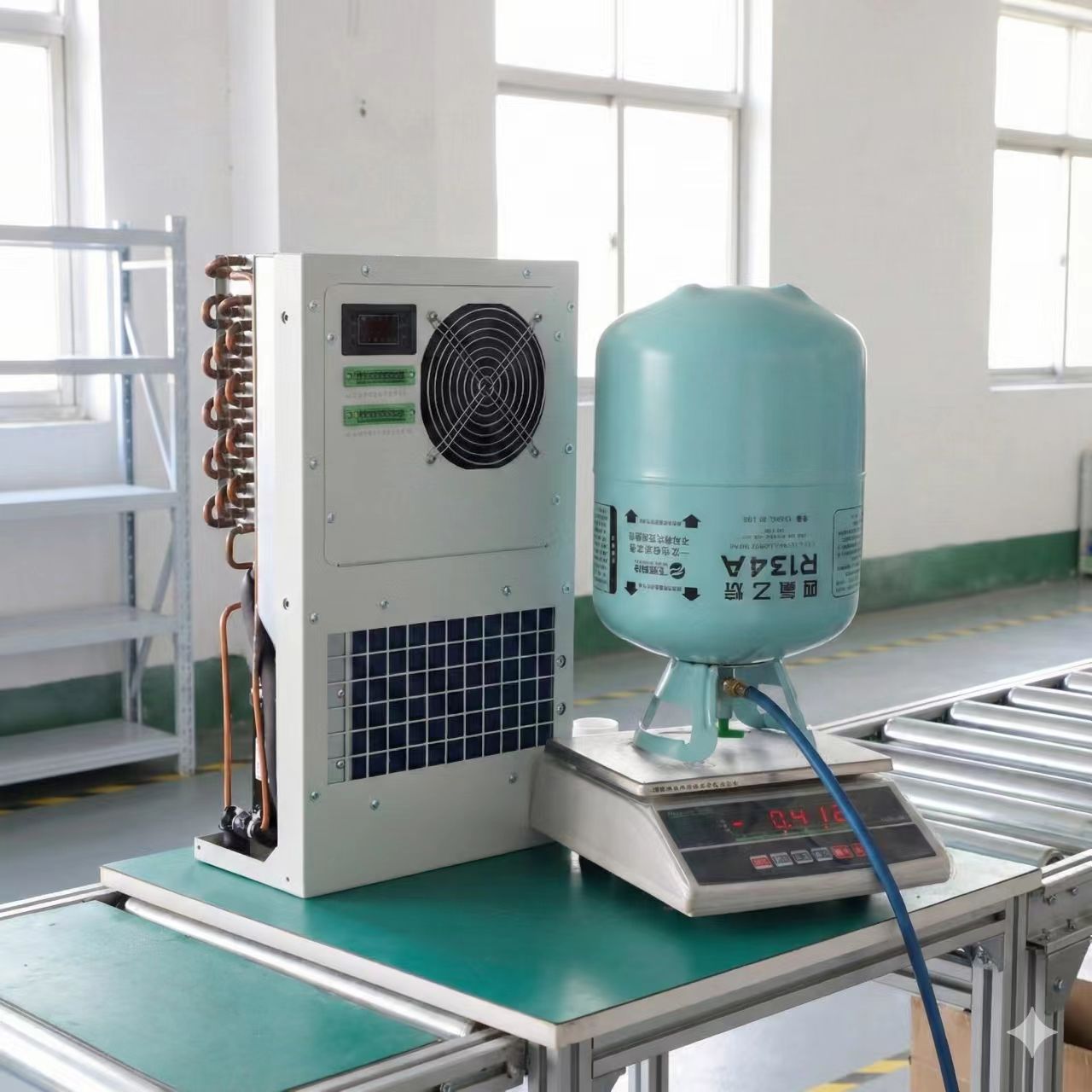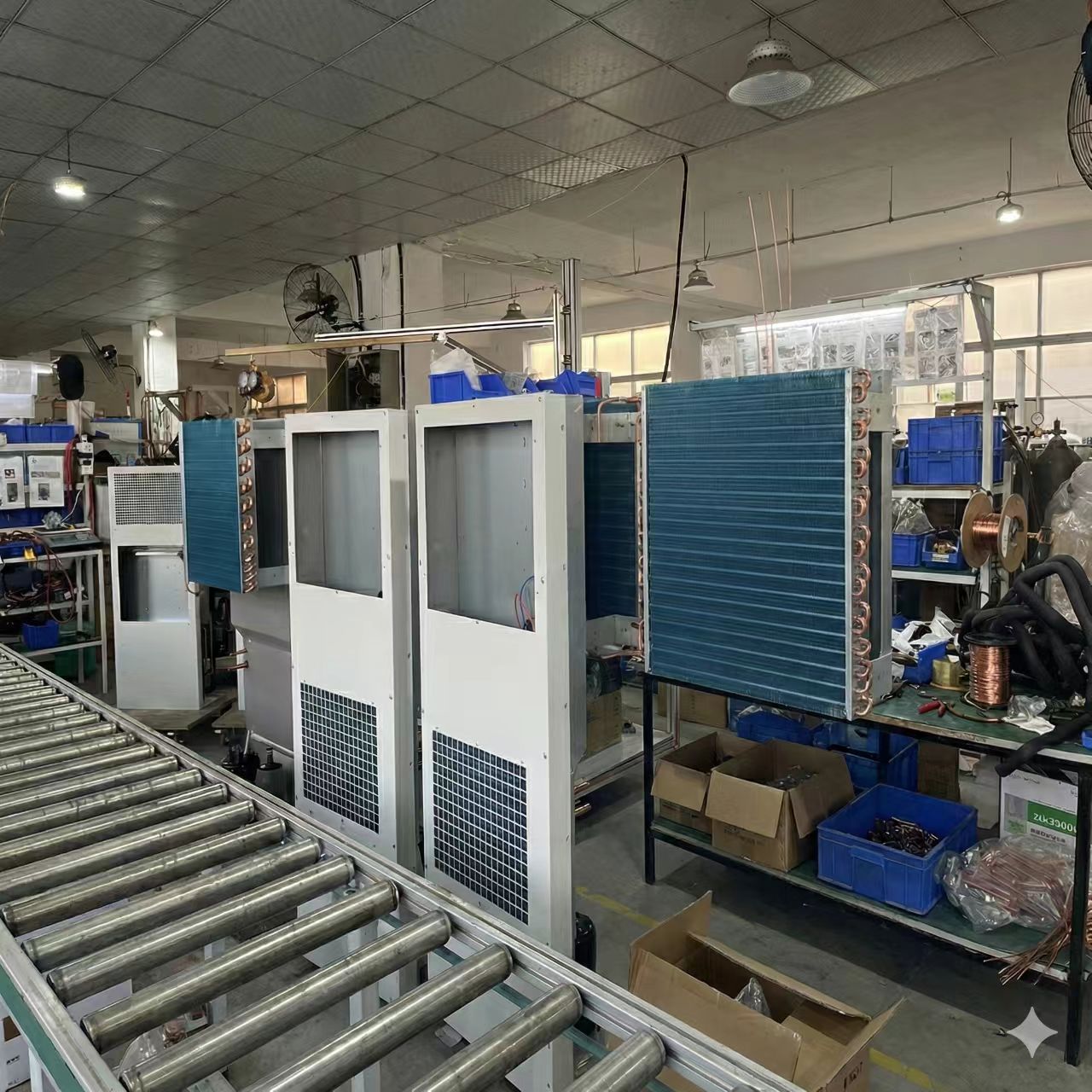
1) When a Cabinet Air Conditioner Makes Sense
A cabinet AC is typically the right approach when you need sealed cooling (no outside air intake) or when the site conditions make ventilation-based solutions unreliable.
Choose cabinet AC when:
-
The enclosure must remain sealed for dust/water protection (IP56)
-
Ambient air is hot, humid, salty, oily, or dusty
-
Internal heat is significant (power electronics, rectifiers, drives, UPS modules)
-
Stability matters (avoid derating, nuisance alarms, over-temperature trips)
If the site is clean, mild, and you can tolerate outside air exchange, fan-filter or heat exchanger solutions may be considered—but most outdoor power sites eventually prioritize sealed reliability.
2) Define the Four Inputs That Decide Everything
Before sizing, capture these four inputs:
-
Internal heat load (W)
-
Max ambient temperature (°C) and sun exposure
-
Target internal temperature (°C) (what your equipment needs)
-
Protection & reliability constraints (IP56, corrosion, maintenance interval)
A “cooling capacity number” alone is not enough—how that capacity performs at your ambient conditions and installation matters just as much.
3) Heat Load: The Fast, Practical Method
The cabinet AC must remove:
-
Internal equipment heat, plus
-
Solar/skin heat (if outdoors in sun), minus
-
Any passive losses (usually minimal in sealed enclosures)
3.1 Internal heat load (typical approach)
Start with equipment power loss (not nameplate power). If you don’t have loss data:
-
For many power electronics, use a practical estimate based on efficiency:
-
Loss ≈ Output Power × (1/efficiency − 1)
-
If data is limited, a conservative working method is:
-
Sum the likely losses of major modules (rectifier/drive/UPS/DC-DC)
-
Add controls, communication, and auxiliaries
-
Apply a margin (10–25%) to cover variability and aging
3.2 Solar and installation “adders”
Outdoor cabinets in direct sun can absorb meaningful heat. Add extra margin when:
-
The cabinet is sun-exposed (especially dark colors)
-
Airflow around the cabinet is blocked (walls, tight corners)
-
The site is a heat island (rooftop, asphalt, near transformers)
Rule of thumb for decision-making:
If you cannot shade the cabinet, treat sun exposure as a real load and size with additional margin.
4) Select Cooling Capacity: Size for the Worst Case
For power cabinets, the worst case is often:
-
Peak internal load + max ambient + sun exposure
-
Plus your required internal temperature limit
4.1 Don’t size to “typical day”
If your cabinet must survive summer peaks, size to the peak condition. Otherwise, you’ll see:
-
High internal temperature alarms
-
Derating and performance reduction
-
Frequent service calls during heat waves
4.2 Recommended sizing philosophy
-
Start from calculated heat load
-
Add site/system margin (installation and sun)
-
Avoid extreme oversizing that causes rapid cycling
-
Use proper control (setpoint + hysteresis) to prevent short cycling
5) Ambient Range -40°C to 50°C: Two Different Problems
5.1 High ambient (up to 50°C)
At high ambient, your AC must maintain performance when the outside air is already hot. Focus on:
-
Performance at high ambient, not only nominal rating
-
Adequate airflow across condenser surfaces
-
Protection against coil fouling (dust, pollen, industrial fallout)
5.2 Low ambient (down to -40°C)
Low ambient doesn’t eliminate problems—it changes them:
-
Condensation risk increases during temperature swings
-
Cold starts and control stability matter
-
You may need anti-condensation strategies (heater, control logic, proper drainage)
Even if cooling isn’t needed at -40°C, humidity control and condensation prevention may be.
6) IP56 Is a System, Not a Sticker
To maintain IP56-level protection, think beyond the cabinet shell:
Key IP56-critical points:
-
Door gasket integrity and compression (latch/lock quality matters)
-
Cable glands and penetrations (correct sealing and strain relief)
-
Condensate drain design (drain without water ingress or backflow)
-
Mounting cutout finish and sealing surfaces
-
Corrosion protection and fastener selection (especially coastal/industrial)
Common failure pattern:
The cabinet is rated IP56 on paper, but field installation introduces weak points (unsealed penetrations, poor drainage routing, damaged gaskets).
7) Mounting Options: Door, Side, and Top (How to Choose)
Since you support all three, help buyers choose based on constraints:
Door Mount
Best when:
-
Side clearance is limited
-
You want service access from the front
Considerations: -
Door rigidity and gasket compression
-
Cable routing to avoid pinch points
Side Mount
Best when:
-
You want clear front access
-
Cabinet doors are lightweight
Considerations: -
External clearance for airflow and service
-
Avoid mounting where hot exhaust recirculates
Top Mount
Best when:
-
Floor space is tight
-
You want to keep external surfaces clear
Considerations: -
Water management (roof exposure)
-
Service access (height, lifting, safety)
-
Ensure the top mount design does not become a leak path
8) Reliability: What Fails After 6–12 Months (And How to Prevent It)
Power sites often discover true costs later. Common drivers:
-
Filter loading → airflow drop → temperature rise
-
Coil fouling → efficiency loss
-
Fan wear → noise, reduced airflow, eventual failure
-
Condensate problems → corrosion, tracking, insulation damage
-
Seal aging → water ingress and dust intrusion
To reduce lifecycle cost:
-
Make filter access simple and schedule it
-
Keep condenser/heat exchange surfaces clean
-
Use alarms or monitoring where possible (temperature trend is powerful)
9) RFQ / Inquiry Checklist (Copy-Paste for Buyers)
Use this in your blog as a practical tool:
Thermal & Environment
-
Internal heat load (W) and duty cycle (24/7? peak?)
-
Max ambient temperature and sun exposure
-
Target internal temperature range
-
Humidity conditions / condensation history
Protection & Installation
-
Required protection level: IP56 (confirm system sealing approach)
-
Mounting type: door / side / top
-
Available clearance for airflow and service
-
Cable entry locations and sealing plan
Electrical & Control
-
Supply voltage range and frequency
-
Temperature control method (setpoint/hysteresis)
-
Alarm outputs and monitoring interface requirements
Maintenance
-
Filter type, access method, recommended interval
-
Condensate drainage method
-
Spare parts availability expectations
Acceptance
-
Site acceptance test plan (temperature target under load)
-
Documentation requirements (drawings, wiring, installation guide)
FAQ
Q1: How do I avoid oversizing a cabinet AC?
Use your worst-case heat load plus realistic site adders, then set proper control hysteresis to prevent rapid cycling. If the cabinet sees wide load swings, consider staged capacity or better control logic.
Q2: Why does internal temperature rise even when cooling capacity seems sufficient?
Common causes are airflow short-circuiting, hot spot not in the cold-air path, filter/coil fouling, or condenser exhaust recirculation—often installation-related rather than “capacity shortage.”
Q3: What matters most for IP56 reliability over time?
Sealing quality at penetrations, gasket condition, drainage that prevents backflow, and corrosion-resistant construction details.