
Case Study: Solving High-Temperature Alarms in an Outdoor Power Distribution Cabinet
Outdoor power cabinets are often installed in harsh environments where high ambient temperature, direct sunlight, dust, and limited maintenance access all affect thermal performance. In many projects, temperature alarms continue even after a cooling unit has been installed. The issue is not always “insufficient cooling capacity.” In many cases, the real problem is airflow layout, installation conditions, or poor heat distribution inside the cabinet.
This case study shows how an outdoor power distribution cabinet project reduced repeated high-temperature alarms by improving the cooling layout and matching the enclosure air conditioner more closely to the real application conditions.
Project Background
The customer was working on an outdoor power distribution cabinet project for a hot-climate region. The cabinets were installed outdoors and exposed to direct sunlight during peak daytime hours. Internal components included power devices, control modules, and communication units, all of which generated continuous heat during operation.
After commissioning, the site reported repeated high-temperature alarms, especially during the hottest part of the day. Although a cooling unit had already been selected, the internal cabinet temperature remained unstable under real operating conditions.
Key Challenges
The project team identified several practical issues:
-
High outdoor ambient temperature during daytime operation
-
Additional solar heat load caused by direct sun exposure
-
Localized hotspots near high-loss electrical components
-
Limited internal airflow guidance inside the cabinet
-
Restricted installation clearance around the condenser side
-
Risk of performance drop over time due to dust accumulation
This meant the thermal problem was not simply about “adding more cooling.” It required a closer look at the entire cabinet layout and real site conditions.
Site Assessment
After reviewing the cabinet structure and operating conditions, several findings became clear:
1. Hot and cold air were mixing inside the cabinet
The cooled air was not reaching the main heat sources effectively. Part of the supply air returned too quickly to the cooling unit before it had absorbed enough heat from the components.
2. Some high-heat components created local hotspots
A few devices generated concentrated heat, but the airflow path inside the cabinet did not guide cooled air directly across those zones.
3. External installation clearance was limited
The outdoor installation space around the cooling unit was tighter than expected. This increased the risk of hot exhaust air recirculation, which reduced condenser efficiency.
4. The alarm point did not represent the whole cabinet condition
The temperature sensor position was too close to a local hot area, so the system alarmed early even when part of the cabinet was still within a manageable range.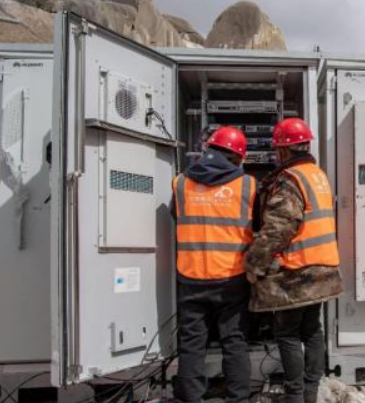
Cooling Solution
To improve the project, the following actions were taken:
Optimized airflow zoning
The internal layout was adjusted to create a clearer cool-air supply path and hot-air return path. This reduced air mixing and improved effective heat removal from the main heat sources.
Improved air delivery to critical components
The airflow direction was optimized so that cooled air could reach the most heat-sensitive electrical devices more directly.
Reviewed installation spacing
The external mounting condition was rechecked to reduce the possibility of hot air short-circuiting back into the condenser intake area.
Adjusted sensor placement
The sensor location was moved to a more representative position along the airflow path, helping reduce false alarms caused by local hotspots.
Matched the enclosure cooling approach to the real operating environment
Instead of focusing only on nominal cooling capacity, the final evaluation considered real ambient temperature, solar load, cabinet heat concentration, and long-term maintainability.
Results
After the airflow layout and installation details were corrected, the cabinet’s thermal performance became much more stable.
The project team observed:
-
Fewer repeated high-temperature alarms
-
Better temperature consistency during peak daytime conditions
-
More effective cooling of key heat-generating components
-
Improved reliability after commissioning
-
Lower risk of repeat service visits related to temperature issues
The main lesson from this project was clear: in outdoor power cabinets, stable cooling performance depends not only on the cooling unit itself, but also on cabinet layout, airflow path, sensor location, and installation conditions.
Practical Lessons for Similar Projects
For panel builders, switchgear manufacturers, and outdoor power cabinet integrators, this case highlights several important points:
-
Cabinet volume alone is not enough to select cooling
Real heat sources and heat concentration matter more. -
More cooling capacity does not always solve alarms
Poor airflow layout can waste usable cooling. -
Direct sunlight must be considered in outdoor projects
Solar load can change cabinet temperature behavior significantly. -
Installation clearance affects condenser performance
A good unit can still underperform if exhaust air is recirculated. -
Sensor placement should reflect actual cabinet conditions
Otherwise, alarms may be misleading.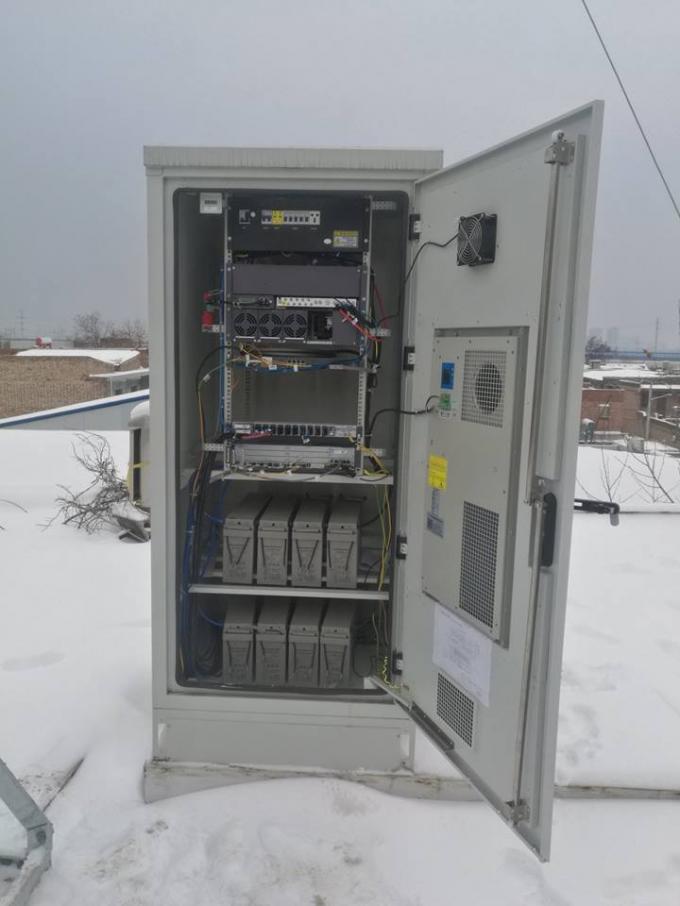
Recommended for Outdoor Power Cabinet Projects
When evaluating enclosure cooling for outdoor electrical cabinets, it helps to confirm:
-
Maximum ambient temperature
-
Sun exposure condition
-
Dust level
-
Cabinet dimensions
-
Main internal heat sources
-
Required IP protection level
-
Maintenance conditions on site
These details make cooling selection more practical and reduce the chance of post-installation problems.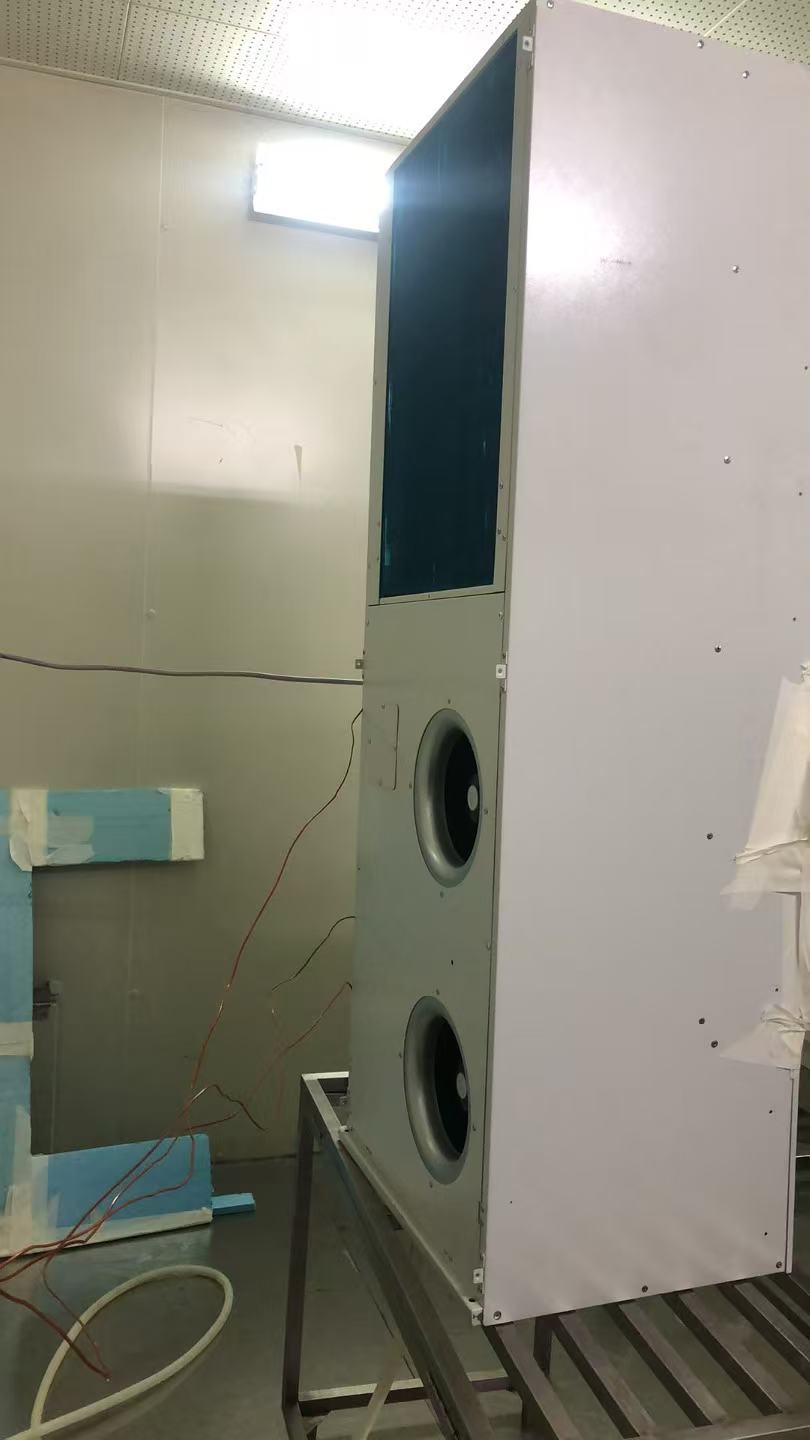
Conclusion
This case demonstrates that repeated high-temperature alarms in outdoor power cabinets are often caused by a combination of thermal layout and site conditions—not only by cooling capacity itself.
A reliable enclosure cooling solution should be based on the real project environment, internal heat path, airflow organization, and service conditions. When these factors are considered early, the cabinet performs more stably and the project becomes easier to deliver and maintain.
If you are working on an outdoor power cabinet, switchgear cabinet, or electrical enclosure project, COLTEX can help review your application conditions and suggest a more practical cooling approach.
Contact us for model selection, layout suggestions, or project discussion.
文末CTA
Need help with an outdoor cabinet cooling project?
Send us your cabinet size, ambient temperature, IP requirement, and main heat sources. We can help you review the application and recommend a suitable enclosure cooling solution.
WhatsApp: +86 18854227753
Email: info@qdcoltex.com